SOLO EXHIBITION
Dali-Sukhothai Cross-cultural Art Study and Creation
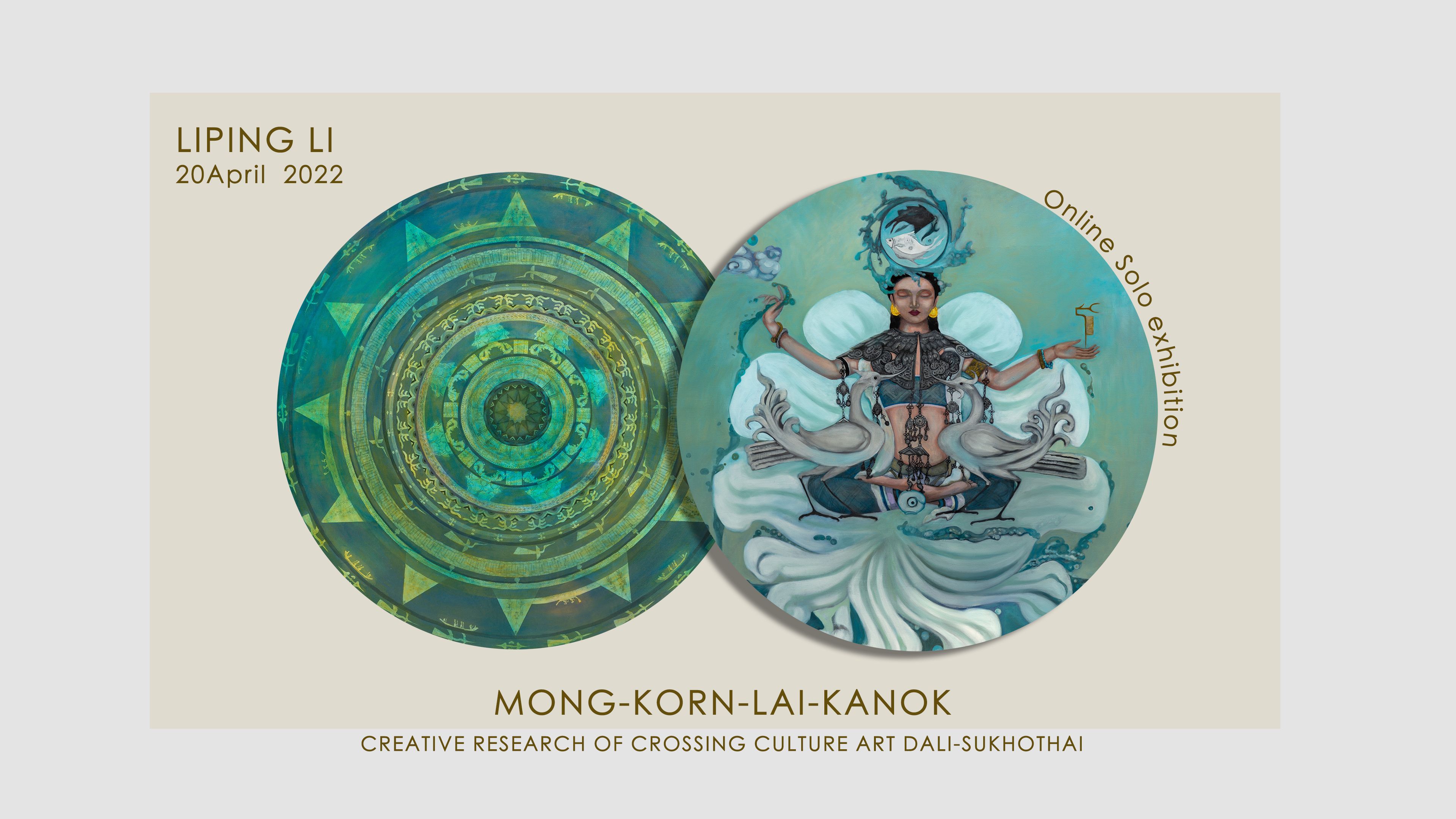
The study examined the history & geography and culture & art of Dali and Sukhothai based on the background of Sino-Thai relations and the historical origin of the two places. Through documentary research, fieldwork, and data collection, the relationship between the cultures and arts of the Dali and Sukhothai was sorted out. The ethnic arts, bronze arts, painting arts, architectural arts, and ceramic arts of the two places were compared and studied. The artistic elements were extracted for the cross-cultural analysis and creation of the "MONG-KORN-LAI-KANOK". This is a Thai pattern of Chinese dragons, which combines the Chinese "MONG-KORN" and the Thai "LAI-KANOK", making the artwork retain the mystery of Oriental culture in its artistic style. The Dali-Sukotai cross-cultural art creation transformed the rich patterns and symbolic elements into a cross-cultural art language.
Work List
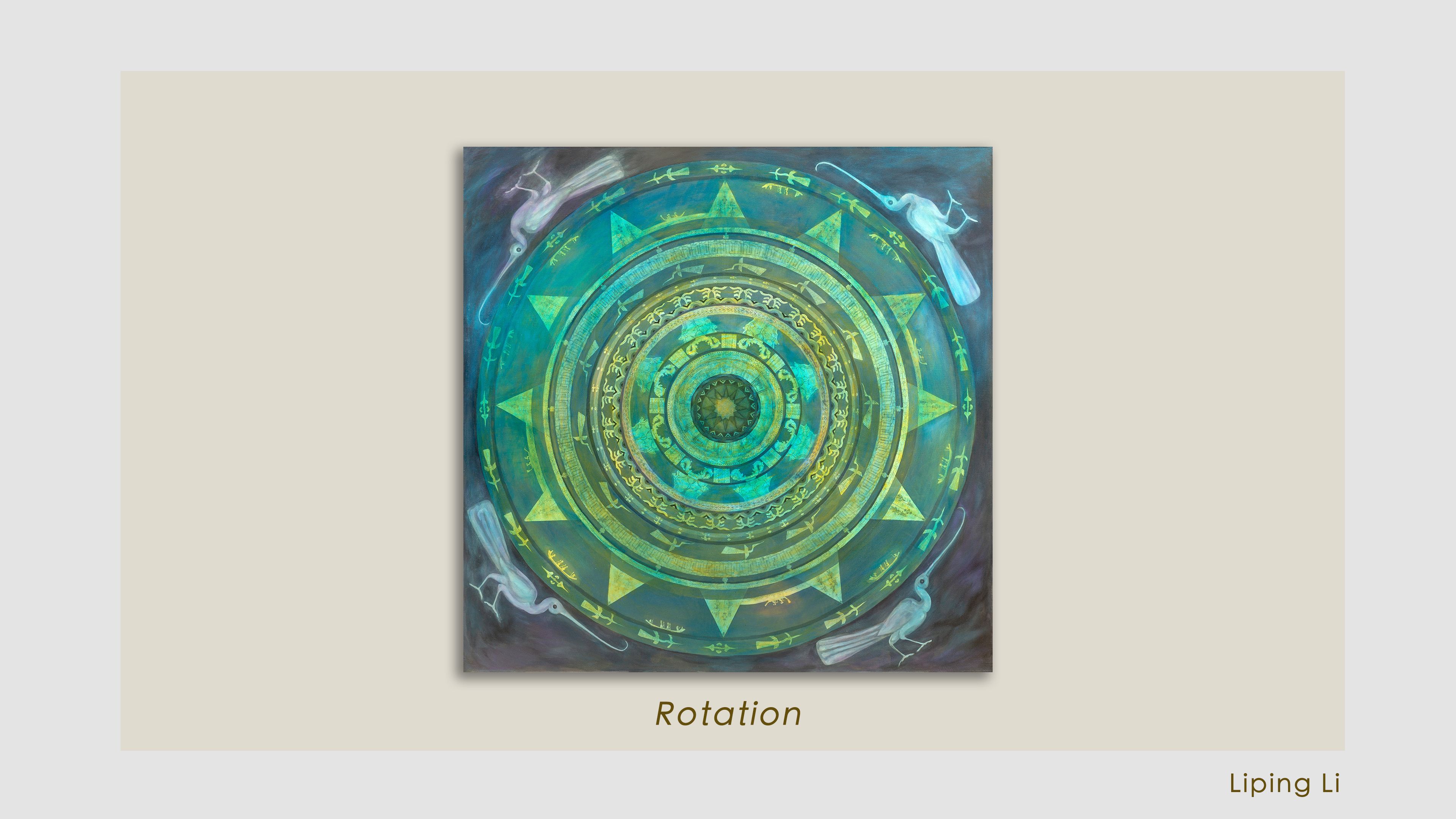
Title: Rotation Material: oil painting
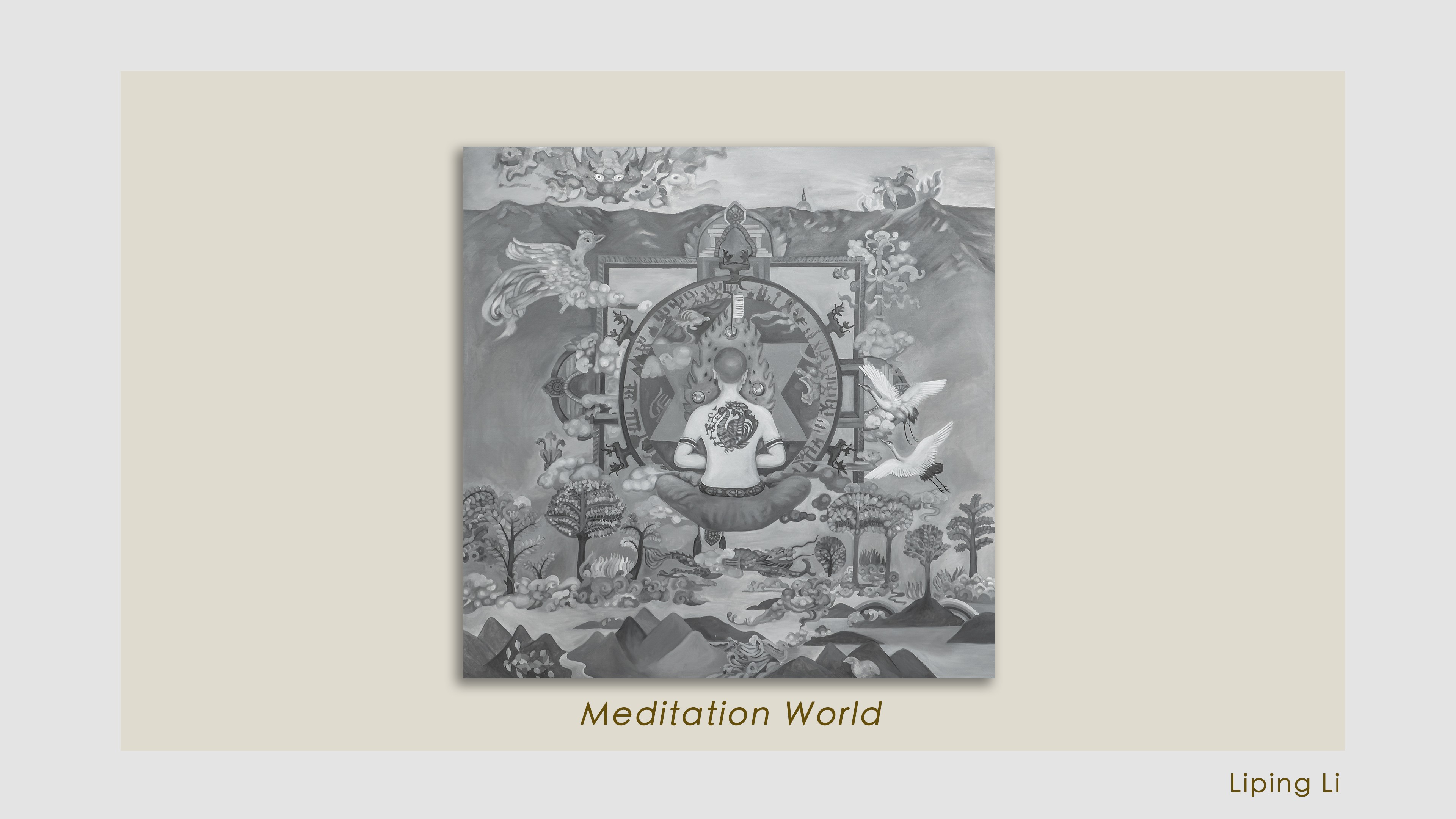
Title: Meditation World Material: oil painting
Size: H 180cm W 180cm
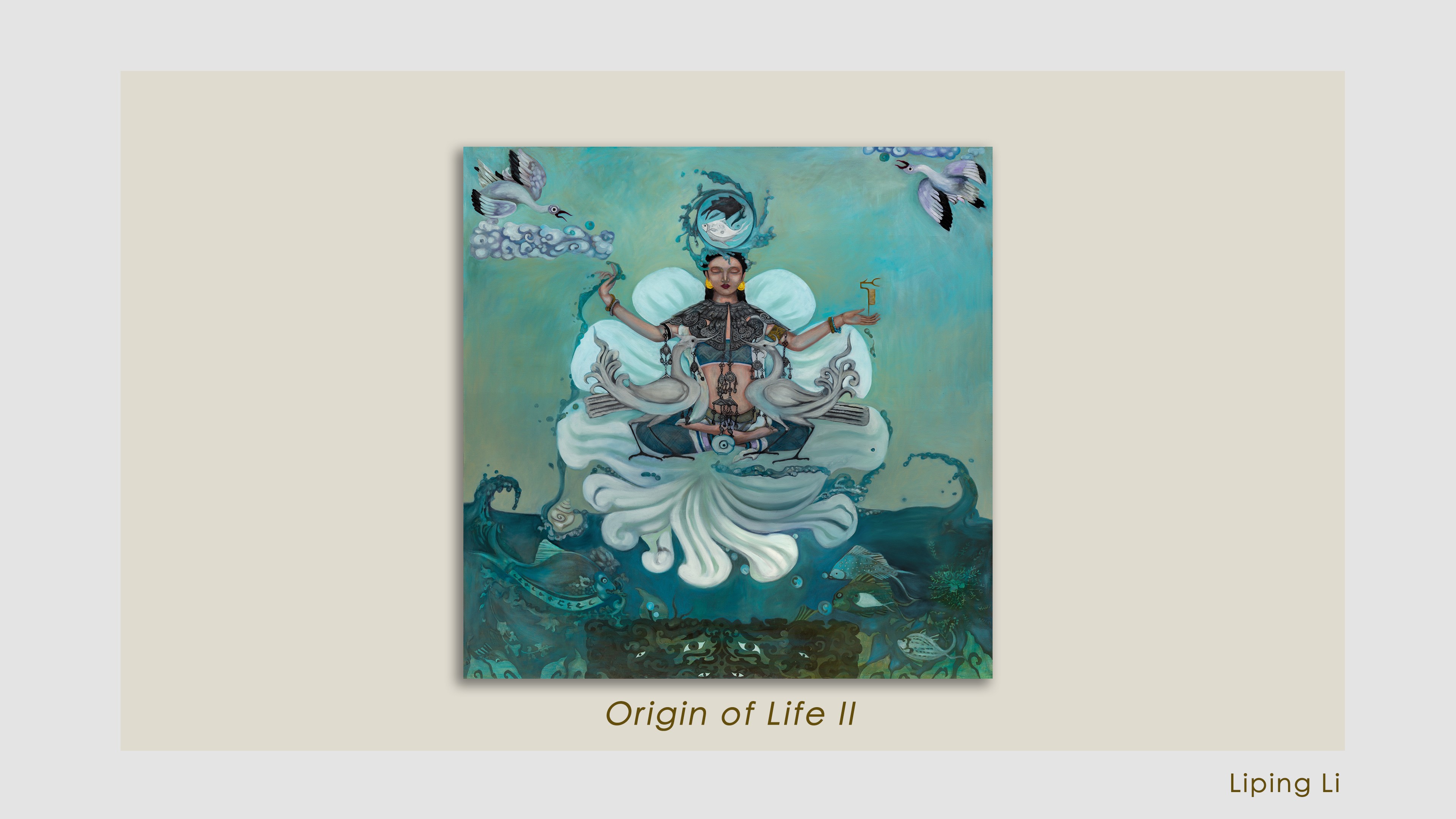
Title: Origin of Life Material: oil painting
Size: H 180cm W 180cm

Title: Mythical Beast I Material: porcelain
Size: H 45cm W 30cm L 50cm
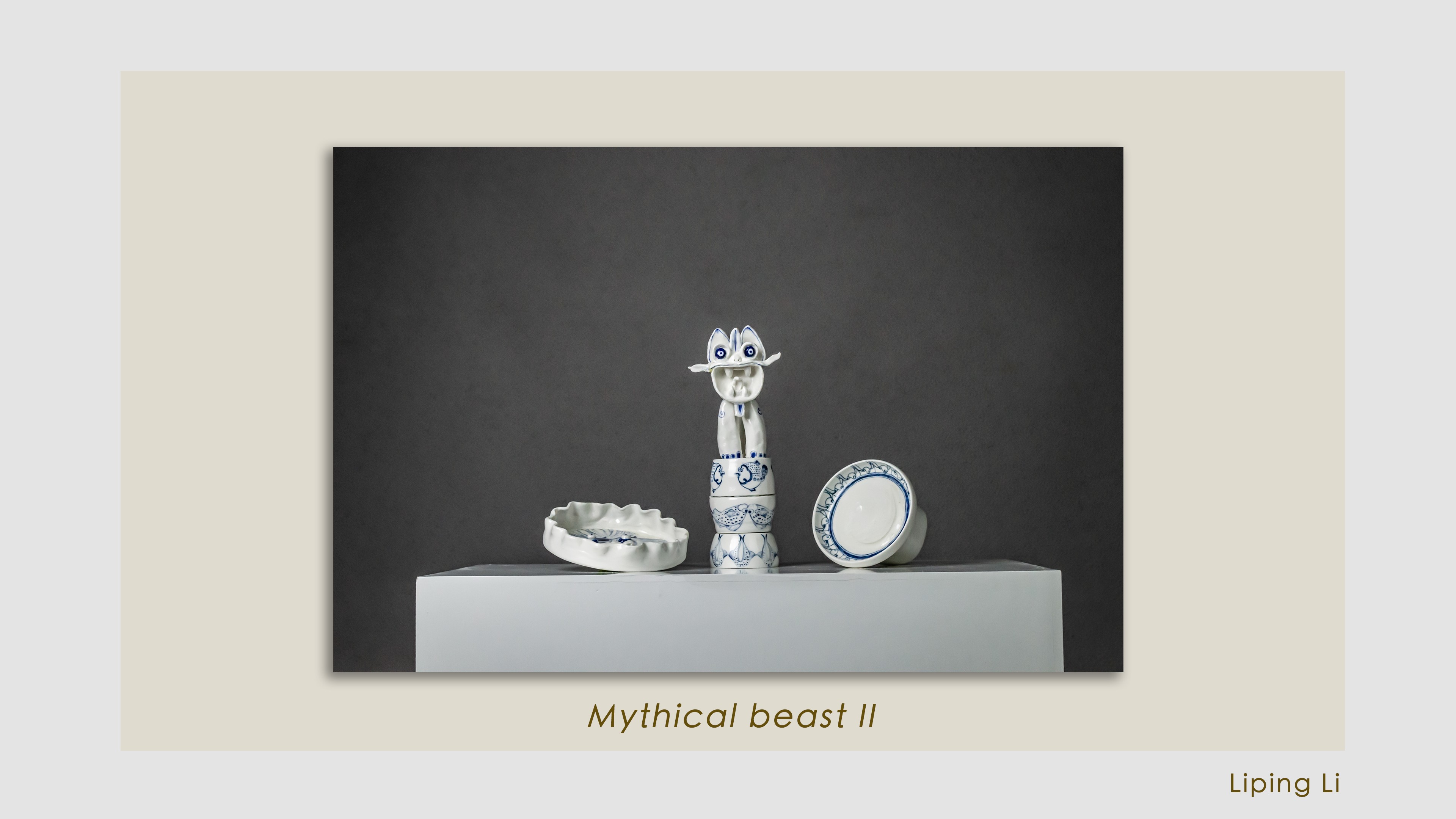
Title: Mythical Beast II Material: porcelain
Size: H 40cm W 20cm L 50cm
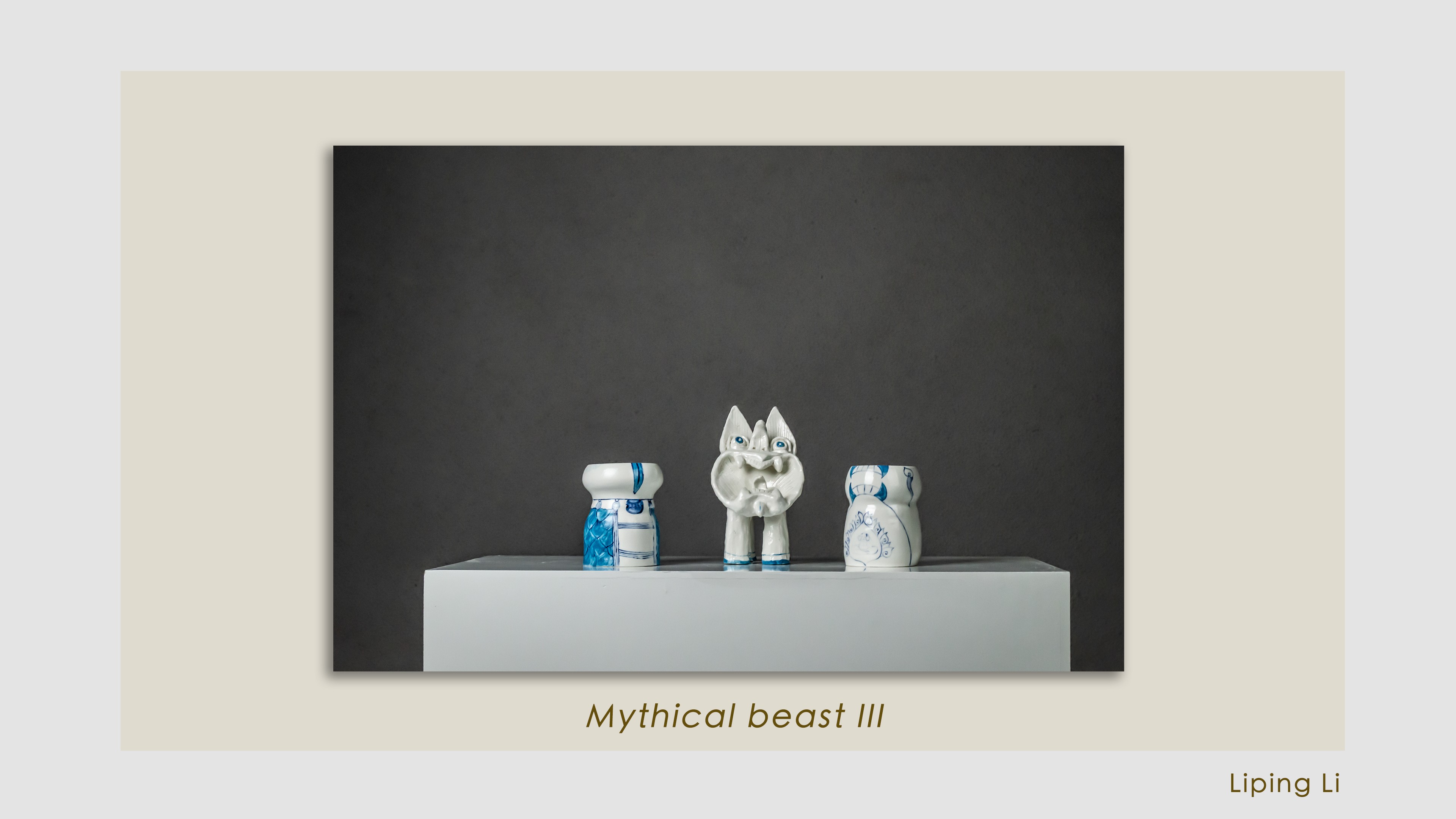
Title: Mythical Beast III Material: porcelain
Size: H 30cm W 20cm L 40cm
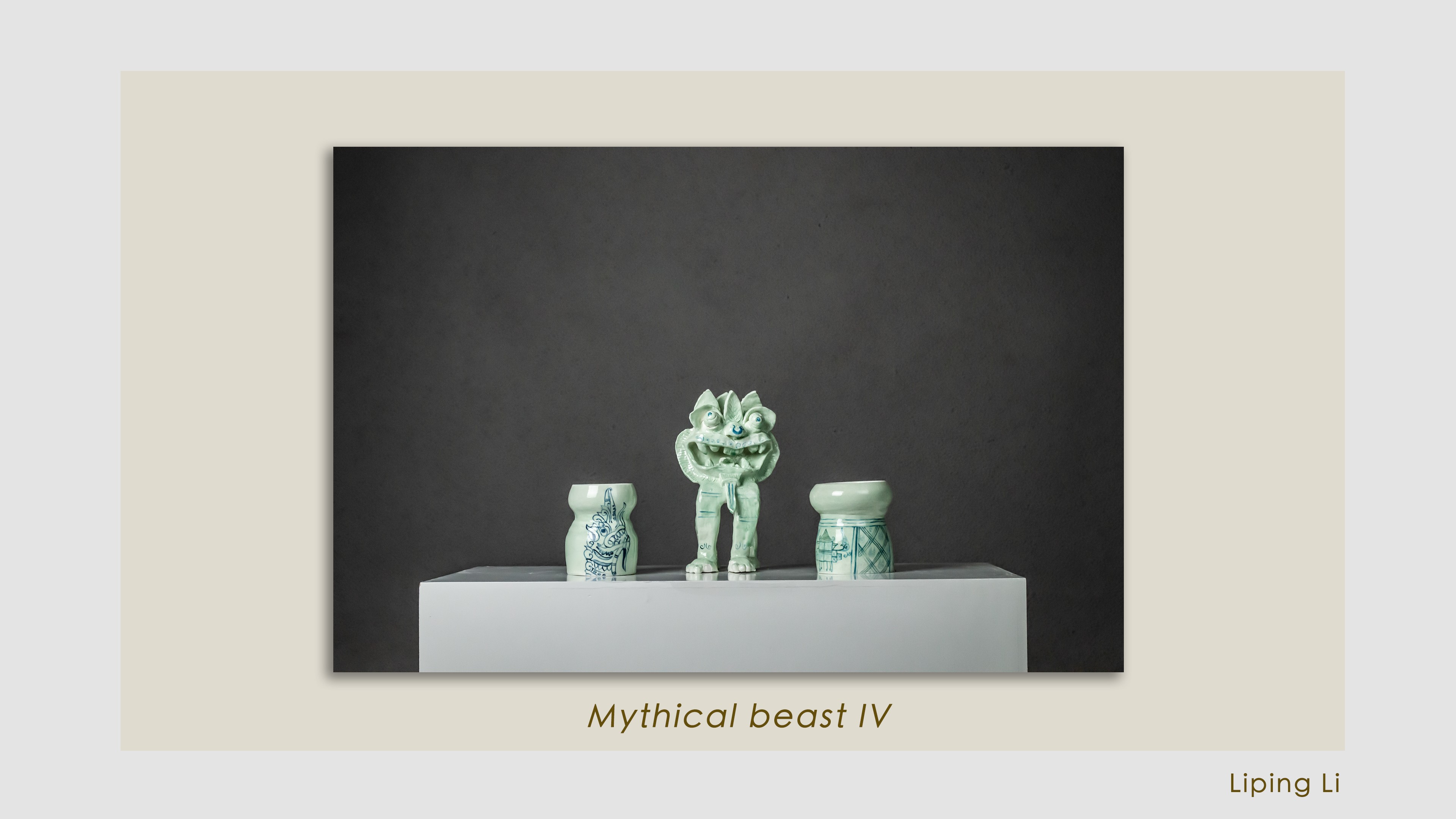
Title: Mythical Beast IV Material: porcelain
Size: H 30cm W 20cm L40cm
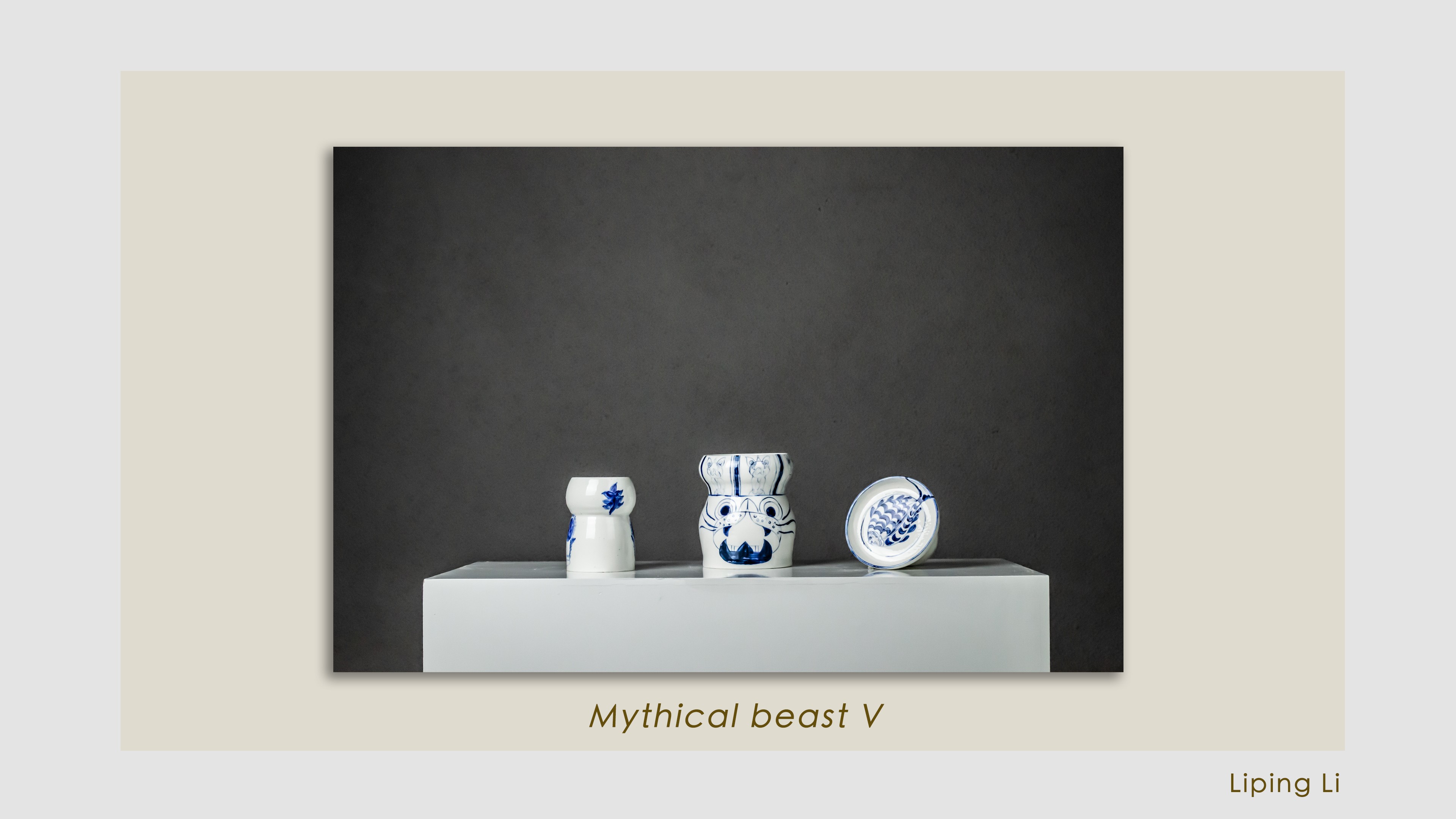
Title: Mythical Beast V Material: porcelain
Size: H 25cm W 20cm L 40cm
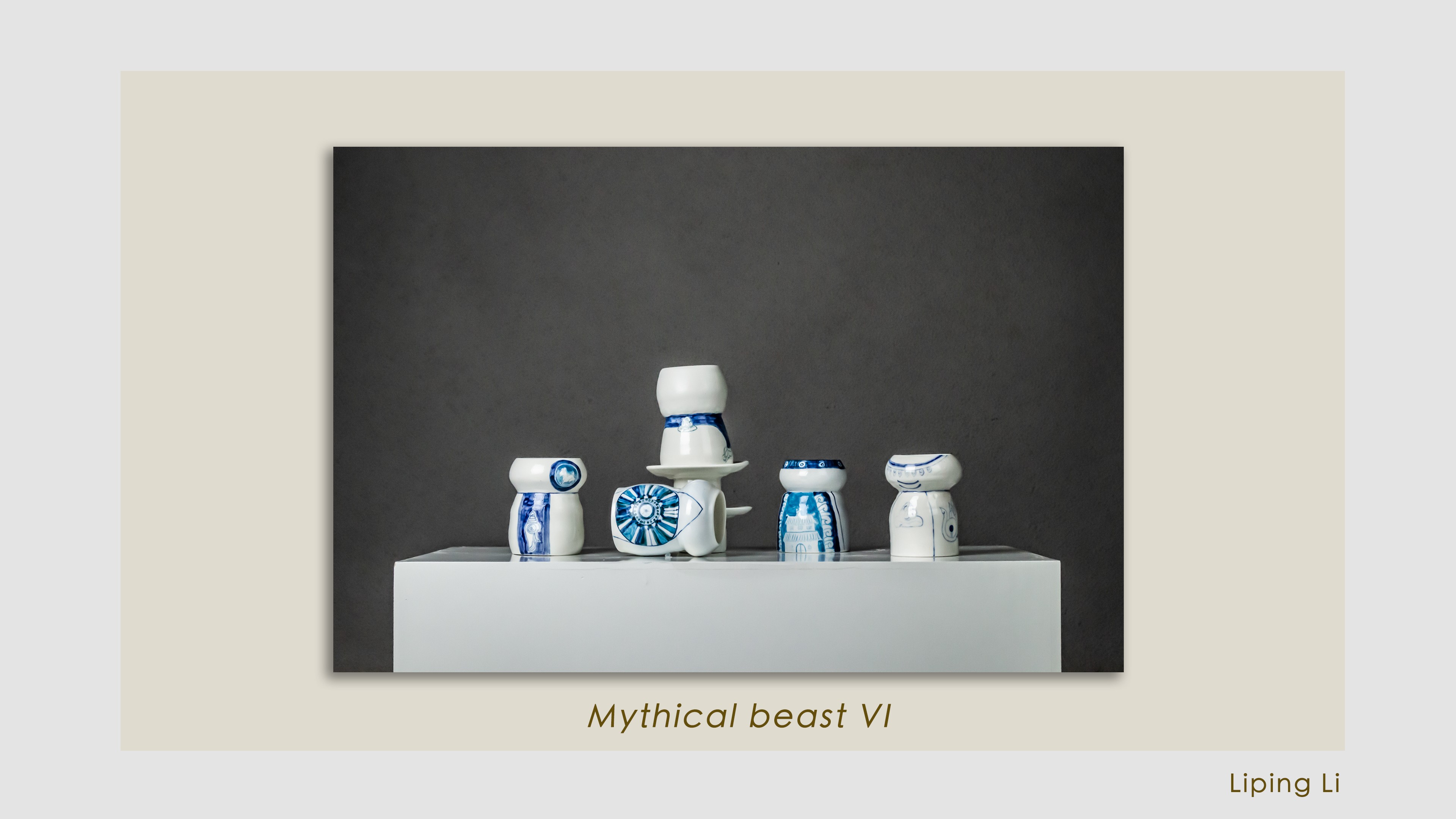
Title: Mythical Beast VI Material: porcelain
Size: H 35cm W 20cm L 60cm
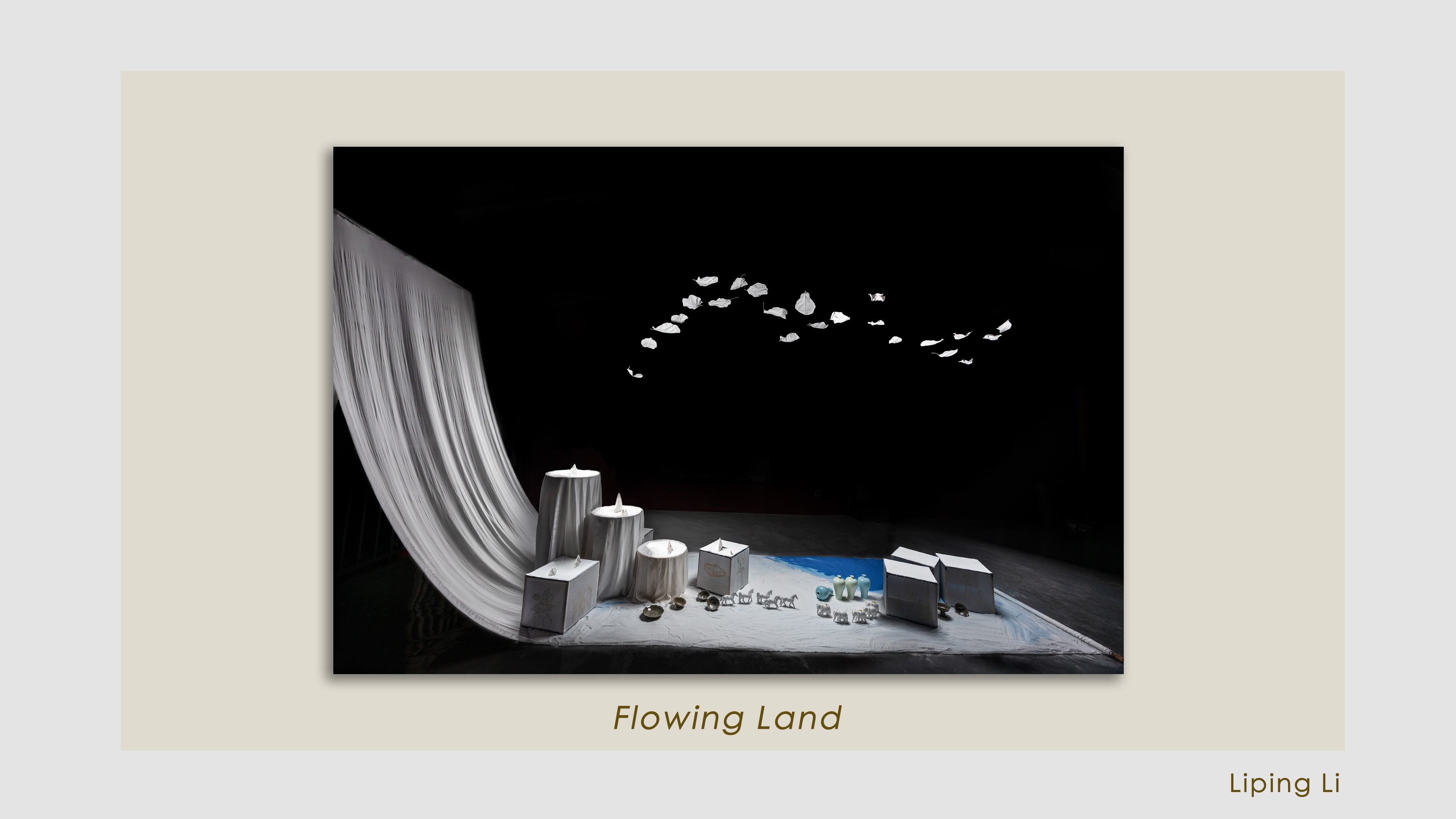
Title: Flowing Land Material: combined material
Size: H 300cm W 600cm
About Me
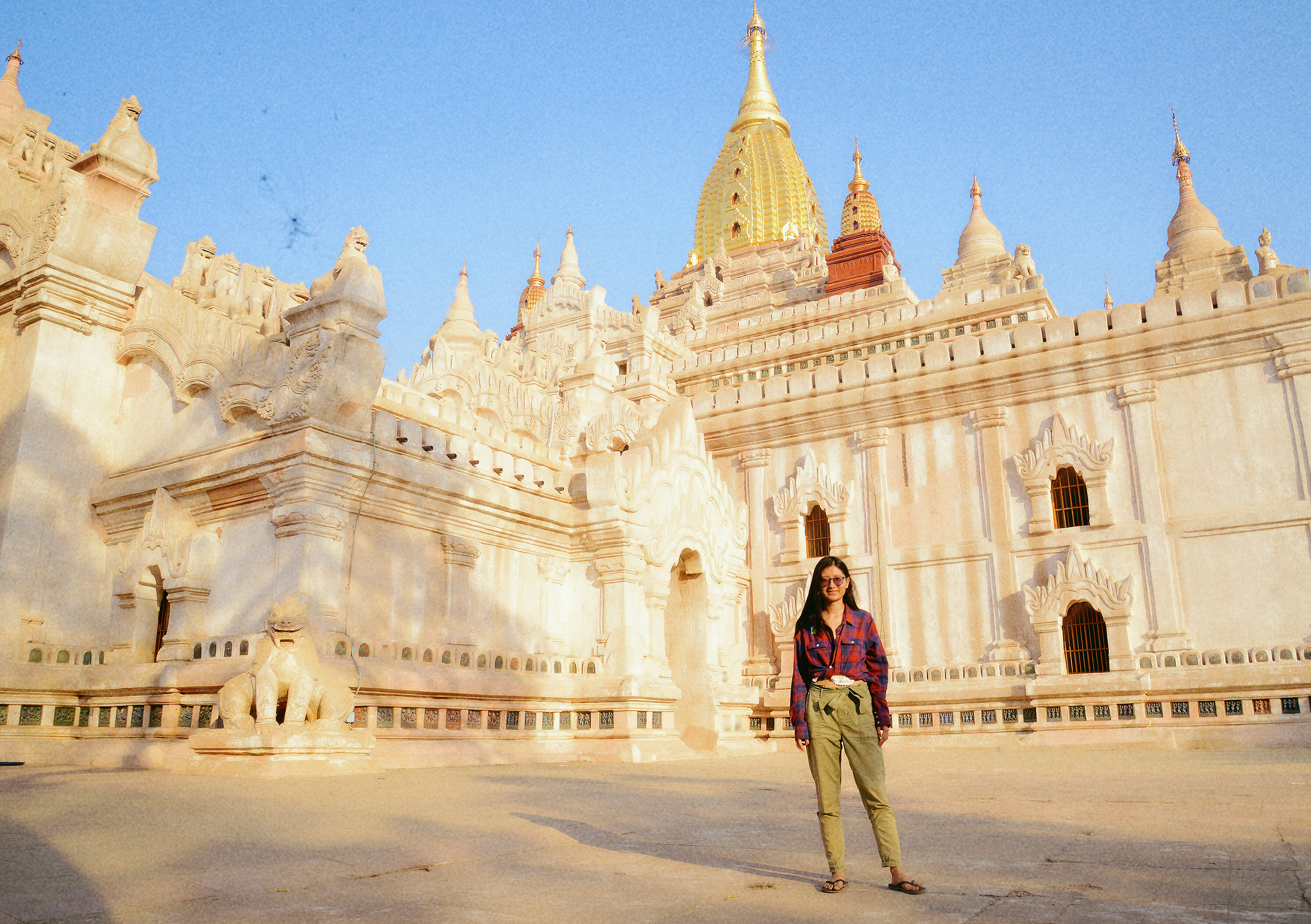
I am Li Liping, from Dali, China, a practitioner of traditional art combined with new media. I focus maily on the exploration of traditional oriental painting patterns, believing that the layers of patterns can gain the expressive power of space.
Oriental art excels in using different layers of patterns to form the picture, stacking the effect of space in a flat way. This approach makes it so that when one appreciates Oriental paintings, one does not rely entirely on intuitive visual perception to view them, but needs to understand the three-dimensional visual treatment into flat effects and the space represented by these layers. The combination of these different layers of patterns becomes a stacking of different spaces. Therefore, oriental art is not a direct spatial art, but an abstract spatial art.
For further information or cooperation, please feel free to contact me.
Get In Touch